If you are comparing microneedling vs. chemical peels, start with the skin concern you want to improve. Are you bothered by indented acne scars, dark marks after breakouts, rough texture, or fine lines? These concerns can look similar in photographs but may need different treatment plans.
For Newmarket patients considering skin treatments at Aurora Plastic Surgery, both options are available at our Aurora clinic. This guide explains their differences, where their benefits overlap, and what to discuss before choosing.
Microneedling Vs. Chemical Peels: The Main Difference
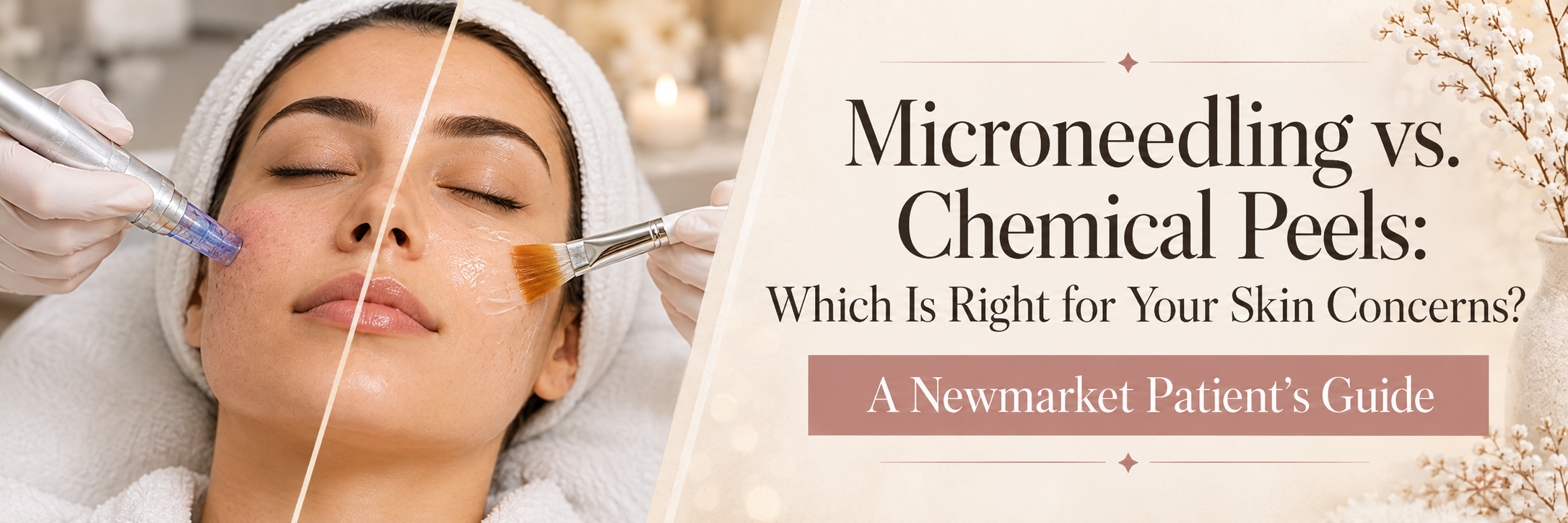
Microneedling uses fine needles to create controlled punctures that stimulate the skin’s repair response and collagen production. Chemical peels use a solution to resurface the skin, with effects that depend on the formula and treatment depth.
As a general starting point, microneedling is worth discussing for certain acne scars and uneven texture. A suitable peel may be worth discussing for dullness, surface discolouration, and some types of acne. Neither treatment is automatically the best choice for everyone.
| Comparison | Microneedling | Chemical Peels |
|---|---|---|
| How it works | Controlled needle punctures encourage collagen remodelling. | A chemical solution produces controlled resurfacing at a selected depth. |
| Concerns to discuss | Certain indented acne scars, uneven texture, and fine lines. | Dullness, uneven pigment, roughness, some acne, and fine lines. |
| When improvements appear | Gradually over weeks to months. | After healing, with timing dependent on the peel. |
| Recovery considerations | Temporary redness, sensitivity, swelling, or dryness. | Redness and possible flaking or peeling; deeper treatments need longer recovery. |
| Treatment planning | A series may be recommended. | The formula, depth, and need for repeat sessions vary. |
This comparison is a discussion guide, not a diagnosis. A skin assessment is needed to recommend a treatment.
When Might Microneedling Be Appropriate?
Professional microneedling at Aurora Plastic Surgery may be considered when improving skin texture is a priority. It is also called collagen induction therapy.
The American Academy of Dermatology’s microneedling guide describes its use for concerns including acne scars, fine lines, and uneven texture. Improvements develop as the skin produces collagen, so the final result should not be judged immediately after an appointment.
Here, we are discussing conventional microneedling. Radiofrequency microneedling adds energy and has a different treatment and risk profile.
When Might A Chemical Peel Be Appropriate?
A professional chemical peel may be an option when your main concern is a dull complexion, rough surface texture, or uneven pigmentation. Selected peels can also form part of a treatment plan for certain types of acne.
The American Academy of Dermatology’s chemical peel overview describes benefits for discolouration, fine lines, and sun-damaged skin. However, a light peel and a deeper peel are different procedures with different recovery needs.
Ask which peel is being recommended and why. The word “peel” alone does not explain how strong the treatment will be or how much time you should allow for healing.
Which Treatment Fits Your Main Skin Concern?
Indented Acne Scars
Microneedling may help improve some depressed acne scars, but scar shape and depth matter. Ice-pick scars and rolling scars may require different approaches, and selected chemical peel techniques or other procedures may also be considered.
The AAD’s acne scar treatment guidance explains why an individual plan may involve more than one treatment. Avoid assuming that a general facial peel or microneedling package will address every scar type.
Dark Marks And Uneven Tone
Flat dark marks after acne are a different concern from indentations in the skin. A suitable peel may help with some pigment concerns, but the cause of the discolouration needs to be assessed first.
If you have melasma or tend to develop dark marks after irritation, discuss that history before treatment. Ask how the proposed plan will account for your risk of further pigmentation.
Active Acne
Active breakouts and old scars need different care. Scar treatment often begins after acne is controlled. Microneedling should be postponed over painful, inflamed, or pus-filled breakouts.
Some peels can help selected types of acne, but an acne treatment plan may be the more useful first step. Your assessment should establish which concern needs attention first.
Fine Lines And Rough Texture
Both treatments may help, depending on the nature of the changes. Ask what improvement is realistic for your particular lines and texture, how it will be measured, and when results should be reviewed.
How Much Downtime Should You Expect?
After microneedling, redness, swelling, or a sunburn-like feeling can last several days; some reactions take up to a week to settle. Collagen-related improvements take longer than the initial recovery.
For chemical peels, depth makes a substantial difference. The AAD’s chemical peel FAQs gives a healing range of one to seven days for a light peel. Medium and deep peels require more recovery and more involved aftercare.
For either option, ask when you can return to makeup, exercise, and your regular skincare products. Follow the prescribed cleansing, moisturising, and sun-protection plan, and do not pick peeling skin. Leave enough time before an important event for healing and review.
What About Darker Skin Tones Or Sensitive Skin?
Skin tone, sensitivity, and previous reactions should influence treatment selection. Microneedling can be used across skin tones, but pigment changes remain a possible risk. Chemical peels can also be appropriate for darker skin when selected and performed by a clinician with relevant experience.
Tell your provider about eczema, cold sores, unusual scarring, allergies, current medications, and recent skin treatments. Pregnancy, breastfeeding, active infections, and certain medicines may change whether or when a procedure is appropriate.
The FDA’s microneedling patient information outlines risks including infection and pigment changes. Peels also carry risks, including persistent redness, pigment changes, and scarring. Neither option should be described as risk-free.
Comparing Treatment Costs
Aurora Plastic Surgery currently lists SkinPen microneedling at $300 for a single session and a chemical peel at $180. Confirm the specific treatment covered by the listed price, any applicable taxes or fees, and the total cost of the recommended plan.
A lower session price does not necessarily mean a lower overall cost. Ask how many visits may be needed, what follow-up includes, and whether preparation or aftercare products are additional.
Can You Have Both Treatments?
Both may have a place in a longer-term plan, but that does not mean they should be booked together or close to one another. Your clinician should determine the sequence and recovery interval based on the treatments selected and how your skin heals.
Ask which concern each treatment would address and why using both would be appropriate for you.
Book A Skin Consultation Near Newmarket
You do not need to arrive knowing which procedure to choose. Bring your main concerns, a list of skincare products and medications, and any dates that affect your recovery plans.
For Newmarket patients exploring microneedling or chemical peels, Aurora Plastic Surgery is located at 155 Addison Hall Circle, Unit 11, Aurora. We can assess your skin and discuss suitable options, expected recovery, and pricing.
Request your personalised skin consultation or call 905-853-6644 to speak with our team.