When searching for professional non-surgical skin rejuvenation, two treatments consistently lead the list: Hydrafacial and Chemical Peels. While both options deliver noticeable improvements in skin clarity, texture, and radiance, they achieve those results through completely different mechanisms.
If you are deciding between a Hydrafacial or a chemical peel in Aurora, Newmarket, or Richmond Hill, this comprehensive guide breaks down how each treatment works, the specific skin concerns they address, and how to choose the ideal treatment for your unique skin goals.
Understanding the Fundamentals: How Each Treatment Works
What Is a Hydrafacial?
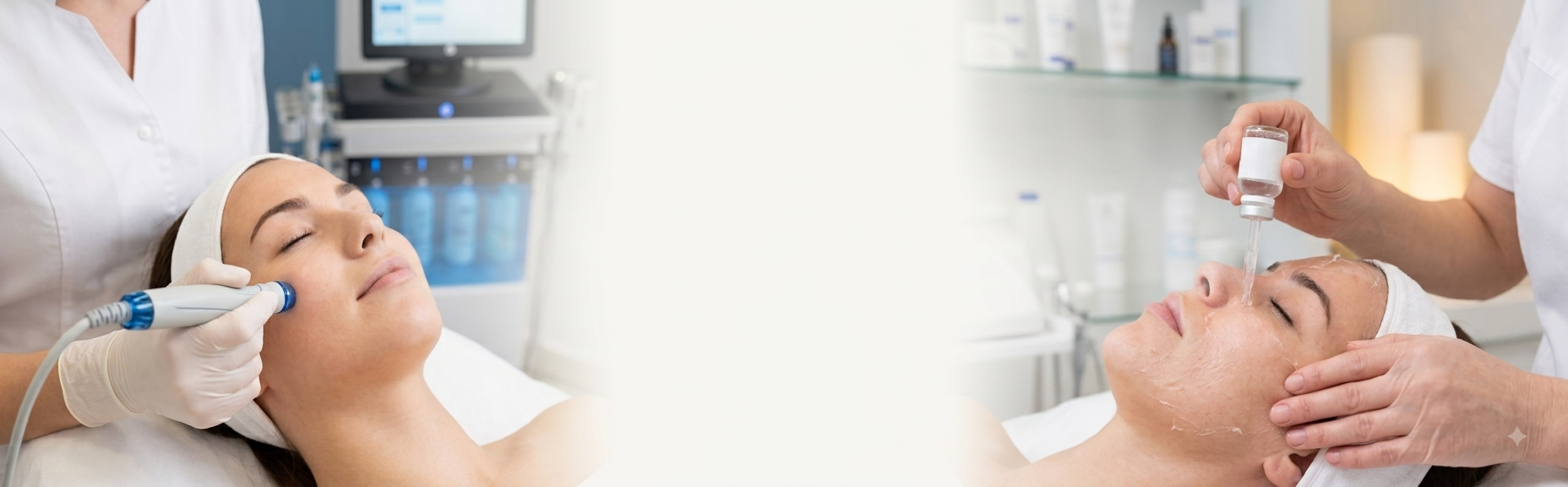
A Hydrafacial is a medical-grade, multi-step hydrodermabrasion procedure that cleanses, exfoliates, extracts impurities, and hydrates the skin simultaneously. Utilizing proprietary vortex-fusion technology, the device acts like a gentle vacuum to clear out pores while infusing targeted nourishing serums rich in antioxidants, hyaluronic acid, and peptides deep into the epidermis.
According to clinical dermatological research highlighted on Healthline, hydrodermabrasion treatments provide non-irritating exfoliation that significantly enhances skin hydration without damaging the skin barrier. Because the treatment is non-invasive and soothing, there is zero downtime required.
What Is a Chemical Peel?
A Chemical Peel relies on carefully formulated, medical-grade acid solutions—such as glycolic acid, salicylic acid, lactic acid, or trichloroacetic acid (TCA)—to chemically exfoliate the outermost layers of the skin. By dissolving the intercellular glue holding dead skin cells together, a chemical peel encourages rapid cellular turnover, revealing fresh, pristine skin underneath.
As detailed by medical resources at the Mayo Clinic, chemical peels range in strength from light superficial peels to medium and deep medical peels. Depending on the depth chosen during your professional consultation, a peel can target surface roughness or penetrate deeper layers to correct persistent hyperpigmentation and structural sun damage.
Head-to-Head Comparison: Hydrafacial vs. Chemical Peel
To help you compare both skin treatment options effectively, let us examine how they perform across key categories:
| Feature | Hydrafacial | Chemical Peel |
|---|---|---|
| Primary Focus | Deep pore cleansing, instant hydration, glow, congestion removal | Cellular renewal, correcting pigmentation, texture refinement, scar smoothing |
| Downtime | Zero downtime; immediate red-carpet ready glow | None to 7 days (depending on light vs. medium peel strength) |
| Sensation During Treatment | Soothing, cooling, massage-like sensation | Mild tingling, warmth, or temporary stinging sensation |
| Frequency | Monthly maintenance for optimal skin maintenance | Series of 3–6 treatments, spaced 4–6 weeks apart |
| Ideal For Sensitive Skin | Excellent; fully customizable for reactive skin | Requires tailored, mild acid formulas (e.g., lactic acid) |
Which Treatment Targets Your Specific Skin Concern?
1. Dehydrated, Dull, or Tired-Looking Skin
Winner: Hydrafacial
If your primary goal is restoring immediate moisture and achieving an instant glow before an event in Aurora or Toronto, Hydrafacial is the clear choice. By infusing hyaluronic acid and essential nutrients directly into clean pores, your skin looks plumper, hydrated, and radiant immediately following your session.
2. Hyperpigmentation, Sun Spots, and Melasma
Winner: Chemical Peel
While a Hydrafacial can include brightening boosters, a customized chemical peel penetrates deeper into the epidermis to shed hyperpigmented skin cells. For stubborn photo-damage accumulated from outdoor summers in York Region, peels accelerate the breakdown of melanin deposits far more effectively.
3. Congested Pores, Blackheads, and Active Acne
Tie (Depends on Skin Condition)
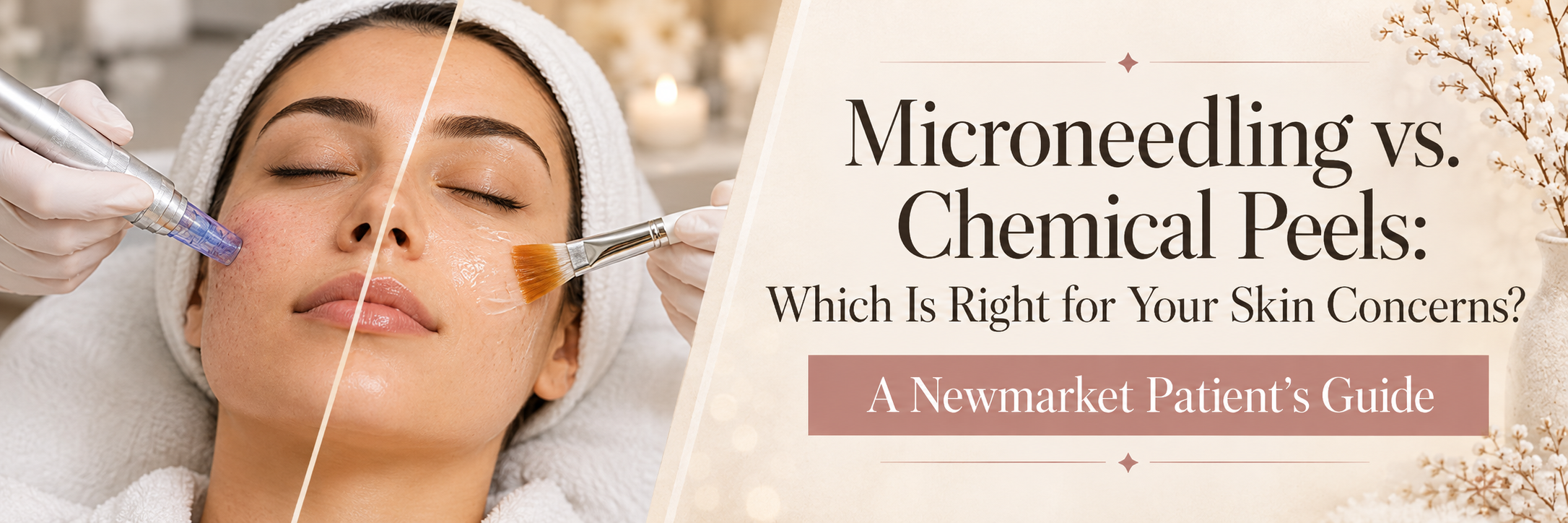
For clogged pores, excess sebum, and blackheads, the painless vortex extraction of a Hydrafacial clears debris swiftly without skin irritation. However, if you suffer from persistent inflammatory acne or post-acne scarring, a specialized medical-grade chemical peel containing salicylic or glycolic acid helps reduce bacterial growth, regulate oil production, and smooth texture over time. For maximum benefit, many clients combine chemical peels with Microneedling treatments to further minimize stubborn acne scars.
4. Fine Lines and Early Signs of Aging
Winner: Combination Strategy
For fine lines and surface wrinkles, chemical peels stimulate long-term collagen production by removing old skin layers. Meanwhile, Hydrafacial provides immediate structural volume through intense hydration, softening the appearance of fine lines instantly. Many clients at our Aurora practice benefit from alternating these procedures throughout the year, or combining them with targeted facial injectables like Botox and Dermal Fillers for total facial rejuvenation.
Seasonal Skin Care in Ontario: Timing Your Treatments
When planning your aesthetic calendar in Southern Ontario, seasonal environmental factors play a major role in achieving the best results:
- Fall and Winter (Ideal for Chemical Peels): Cooler months with reduced UV index levels provide the safest period for chemical peels. Following a peel, your fresh skin is particularly sensitive to sunlight. Taking advantage of the winter months reduces the risk of post-inflammatory hyperpigmentation while repairing summer sun exposure.
- Spring and Summer (Ideal for Hydrafacials): During the brighter months when outdoor activities pick up across the GTA, Hydrafacial is the perfect go-to treatment. It clears sweat, sunscreen buildup, and pollen without peeling or compromising your skin’s UV sensitivity.
To ensure proper skin barrier protection throughout any cosmetic treatment plan, practicing rigorous daily sun protection is mandatory. The Canadian Dermatology Association recommends applying a broad-spectrum sunscreen with SPF 30 or higher every day, regardless of the season.
Can You Combine Hydrafacial and Chemical Peels?
Yes! In fact, multi-modality treatment plans frequently yield the most dramatic results. For instance, incorporating a light chemical exfoliation stage within a customized Hydrafacial session allows deeper infusion of hydrating serums.
Alternately, establishing a scheduled rotation—receiving a deep-corrective chemical peel followed by a soothing Hydrafacial two weeks later—helps accelerate healing while keeping the skin barrier perfectly balanced. During your initial skin assessment at Aurora Plastic Surgery, our medical team will design a personalized plan catered to your unique skin type, goals, and lifestyle.
Why Choose a Physician-Led Clinic in Aurora?
While basic facial treatments are widely available at standard day spas, choosing a physician-led plastic surgery clinic ensures that your skin receives medical-grade formulations and precise oversight. Under expert clinical guidance, every chemical peel concentration and Hydrafacial serum booster is carefully selected to match your skin safety profile, reducing risks and delivering superior aesthetic outcomes.
Book Your Skin Consultation in Aurora, ON Today
Ready to discover whether a Hydrafacial or a chemical peel is the right fit for your skin goals? Let our specialized cosmetic team craft a tailored rejuvenation strategy for you.
Aurora Plastic Surgery
155 Addison Hall Circle, Unit 11
Aurora, ON L4G 3X8
Phone: (905) 853-6644
Website: auroraplasticsurgery.ca